
Can a Head Spa Help with Dandruff and an Itchy Scalp?
Quick Answer
A head spa may help if your scalp feels itchy or flaky from product buildup, excess oil, or dry skin. While it’s not a substitute for medical treatment for more serious underlying scalp conditions, the extra cleansing and moisture may offer some much-needed relief.
Most people think of a head spa and immediately picture the relaxing part (and yes, there are plenty of reasons to love the head spa experience). But when flakes or irritation keep showing up, you may start looking into a head spa for dandruff and wondering if all that scalp attention can help. Let’s look at some common reasons your scalp may be feeling this way, where a head spa comes in, and when you may need a different approach.
What Are the Common Causes of an Itchy Scalp?
An itchy scalp can happen for many reasons, and dandruff isn’t always the culprit. From your hair routine to changes in your scalp, understanding what may be behind the discomfort can help you figure out what may help.
Dandruff: Flaking and irritation are common signs of dandruff, and symptoms can range from mild to persistent.
Dry scalp: A lack of moisture can leave your scalp feeling tight and dry, often with small flakes.
Product buildup: Dry shampoo, styling products, oils, and other residue can accumulate on the scalp and lead to irritation or discomfort.
Excess oil: Too much oil can mix with dead skin and buildup, leaving your scalp feeling greasy and irritated.
Sensitivity to hair products: Certain shampoos, conditioners, dyes, or styling products may contain ingredients that bother a sensitive scalp.
Scalp conditions: Conditions such as seborrheic dermatitis, eczema, or psoriasis can also cause ongoing irritation, redness, and flaking.
How Can a Head Spa Help with Dandruff and an Itchy Scalp?
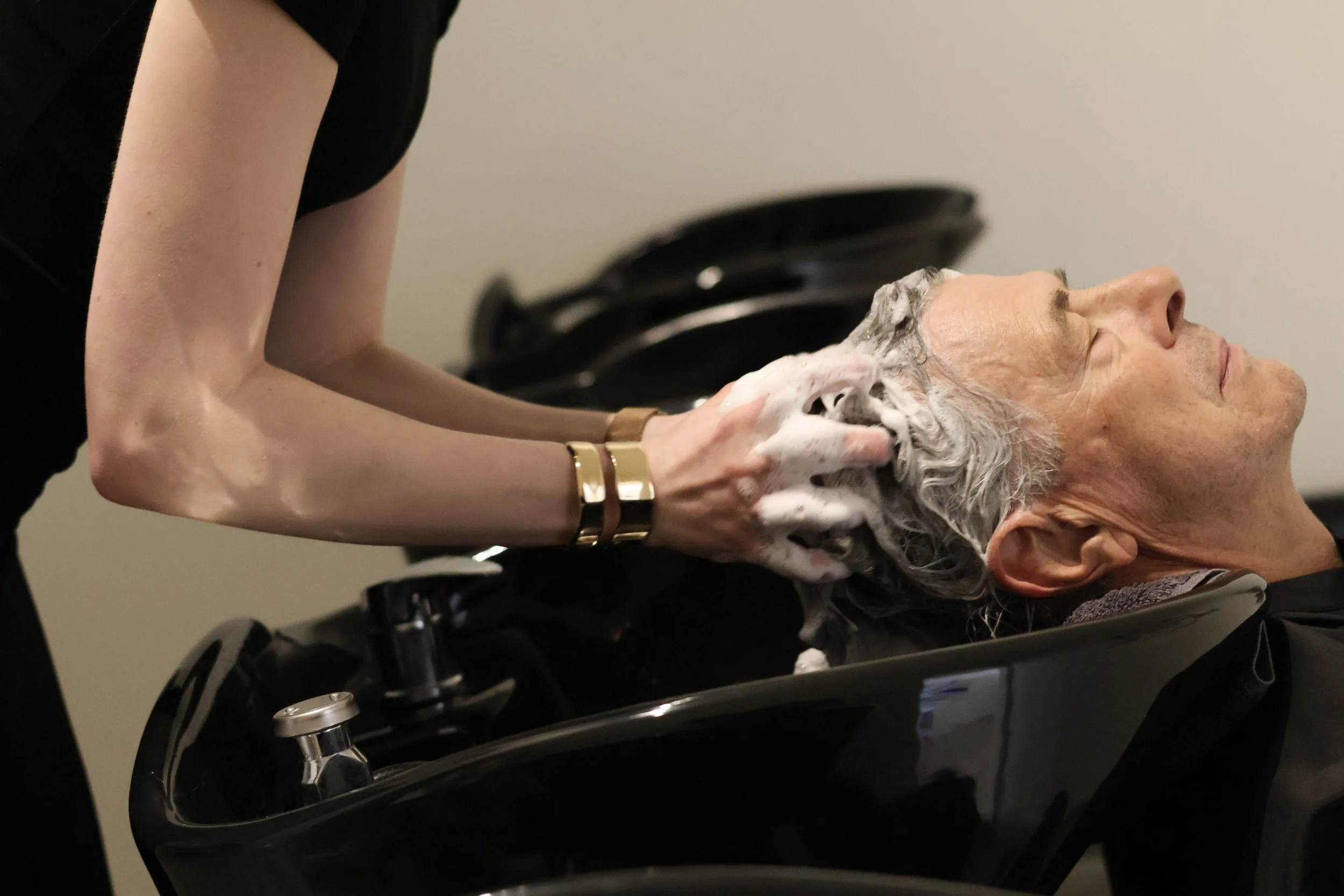
A head spa goes beyond your regular wash routine by giving your scalp more focused attention. While it won’t address every reason for irritation, there are a few ways the experience may help.
Removes Scalp Buildup
Deep cleansing and gentle exfoliation can help remove dead skin, excess oil, and leftover hair products. This can be especially helpful if dry shampoo and styling products are a regular part of your routine.
Helps with Excess Oil
If your scalp tends to get oily, a head spa can help wash away some of that excess oil. Removing what has accumulated between washes can leave your roots and scalp feeling lighter.
Adds Moisture to a Dry Scalp
If your scalp feels dry or tight, a little added moisture may help ease that uncomfortable feeling. Restoring moisture can also help with the dry, flaky feeling that sometimes comes with a dehydrated scalp.
Gives You Time to Relax
And then there’s the part head spas are famous for: the massage. Gentle touch and massage can feel soothing when your scalp is tense or uncomfortable, while giving you a chance to slow down and enjoy a little uninterrupted “me time.”
When Do Scalp Concerns Need Professional Treatment Instead?
Some scalp concerns need more than a head spa. If you’re experiencing significant redness, sores, thick scaling, pain, hair loss, severe irritation, or dandruff that continues or gets worse over time, it’s a good idea to speak with a healthcare professional or dermatologist. A head spa can complement your usual routine, but it shouldn’t replace medical treatment when one is needed.
How Often Should You Get a Head Spa?
Most clients schedule a head spa every 4 to 6 weeks to maintain scalp health and overall hair condition. Your ideal timing may vary depending on your hair, lifestyle, and what you’re experiencing between visits. Regular appointments can also help you stay consistent with your routine while giving you a little time to reset and relax. Our team is always happy to talk through what frequency may work best for your individual needs.
Frequently Asked Questions
Can You Do a Head Spa for Any Type of Hair?
Yes, our head spa works for most hair types and textures, though a small additional charge applies for long or dense hair. The only exception is hair with extensions, as we don’t offer head spa services with extensions installed to help prevent tangling or damage.
How Long Do the Benefits of a Head Spa Last?
The refreshed feeling after a head spa may last anywhere from several days to a few weeks, depending on your lifestyle and hair routine. Keeping up with a consistent routine at home can help maintain the results between appointments.
Can You Get a Head Spa If You Have Dandruff?
Yes, you can generally get a head spa if you have dandruff, especially when there is noticeable buildup or dryness. However, persistent or severe dandruff may require evaluation and treatment from a dermatologist.
Can You Get a Head Spa If Your Scalp Is Irritated?
It depends on the cause and severity of the irritation. If you have significant redness, pain, open sores, or ongoing symptoms, it’s best to consult a healthcare professional before booking a head spa.
Give Your Scalp a Little Relief
Sometimes your usual wash routine just doesn’t quite do the trick. A professional head spa in Albuquerque can give your scalp some extra attention while giving you the chance to slow down, relax, and enjoy some well-deserved “me time” at Mesh Hair Studio.
Ready for a little relief and relaxation? Book your head spa appointment today!
Key Takeaways
Dandruff is one possible reason for an itchy or flaky scalp, but it isn’t the only one.
A head spa may help remove buildup and excess oil or add moisture when dryness is an issue.
Your head spa experience can be adjusted based on what you’re noticing with your hair and scalp.
There’s no one-size-fits-all schedule for head spa appointments.
Persistent or severe symptoms should be evaluated by a healthcare professional.